
How Broad Vessel Design Experience Delivers Innovation & Efficiency to Projects
The marine and maritime industry has reached a remarkable era of technological growth, yet many design practices remain anchored in traditional silos. Naval architecture firms frequently specialize in a single sector, dedicating their entire practices exclusively to rugged commercial workboats, custom recreational vessels, or rigid government contracts. While deep specialization has its historical merits, forward-thinking operators are discovering that the most groundbreaking advancements occur when these boundaries are removed and ideas are allowed to flow freely.
A growing number of vessel owners and operators are finding that the most innovative, efficient solutions happen at the intersection of these industries. Boksa Marine Design (BMD), an engineering and naval architecture firm based in Florida, has built its reputation on deliberately embracing this collaborative, cross-sector philosophy. By maintaining a vibrant and active portfolio across the commercial, recreational, and government sectors, the firm creates an inspiring cross-pollination of engineering ideas that directly elevates the performance, style, and capability of its clients' vessels.
A Foundation in Varied, Full-Service Capabilities
BMD originally launched with a primary focus on large custom yachts, working on major early projects with builders like Burger Boat Company. However, when the global economic downturn hit the luxury market, the agile company chose to diversify rather than retreat, expanding rapidly into the commercial and government sectors.
"It forced us to diversify and pick up more commercial clients," recalls Jeff Kuenning, president and naval architect at BMD. "It really allowed us to expand our base, as well as our capabilities."
Today, that expanded capability is a core advantage for customers. Boksa offers a full suite of services that spans total vessel design—guiding a project smoothly from an initial concept through delivery. Because the firm provides in-house naval architecture, marine engineering, production engineering, and specialized marine electrical engineering, clients don't have to piece together disjointed engineering teams. Every discipline works side-by-side in a unified environment.
By implementing cross-sector engineering solutions right from the start, vessel owners can avoid costly, time-consuming design modifications mid-build, significantly accelerating the timeline from concept to delivery and maximizing long-term operational efficiency.
The Core Commonalities of Hull and Systems
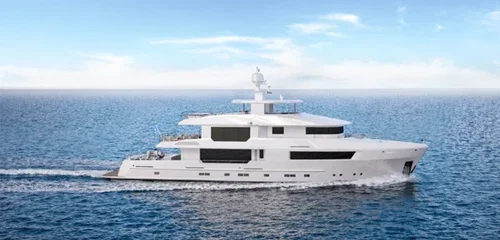
At first glance, a 100-foot luxury motor yacht and an ocean-going commercial tugboat appear to have almost nothing in common. One is engineered for high-end comfort and flawless aesthetics; the other is built to endure punishing industrial environments. Yet, from a pure physics and engineering standpoint, the fundamental building blocks are remarkably aligned.
"They share a lot of similarities," Kuenning explains. "At the end of the day, if you strip away everything, they look very similar. You still have the structures, you still have the systems supporting all the amenities and propulsion, and so on."
This baseline similarity extends directly into regulatory compliance and vessel safety. Whether engineering a commercial passenger vessel or a high-end charter yacht, the core design criteria – such as weight calculations, intact and damage stability, and structural integrity – remain heavily intertwined.
"To a degree, a vessel is a vessel," Kuenning notes. "A lot of the requirements, though there may be some variations, are similar. You see a lot of the same criteria, which allows for us to easily flex between vessel types."
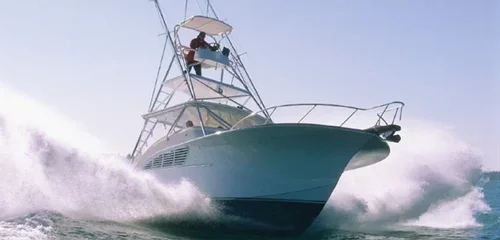
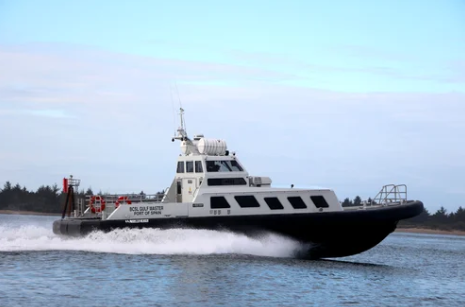
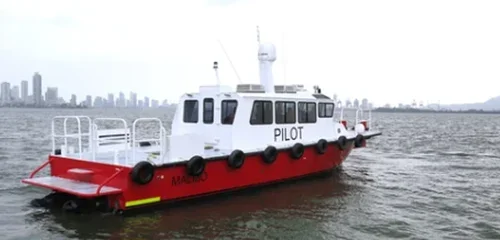
Applying Yacht Ingenuity to Commercial and Government Projects, and Vice-Versa
The true advantage for the customer emerges when the distinct challenges of one sector inspire an elegant solution in another. Designing custom luxury yachts requires an extreme level of spatial optimization and creative engineering because owners frequently demand wide-open vistas and minimalist structures that conflict with standard engineering layouts.
"With the yachts, you're looking at luxury – big windows and wide open spaces. Owners will say, 'nope, I don't want that stanchion there. It interferes with the dining table.' And we of course want to deliver the best design for their needs. So it really forces us to get creative," says Kuenning.
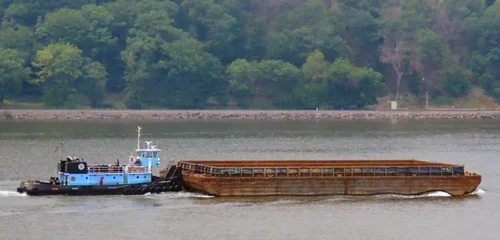
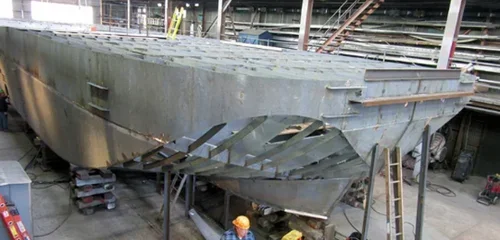
When engineers are routinely pushed to find creative workarounds for complex structural and spatial problems on yachts, they bring that elevated creative mindset over to commercial workboat projects. Conversely, the rigorous operational demands, heavy deck machinery, and raw structural considerations of commercial tugs, barges, and aluminum workboats inform how the firm approaches the reliability and serviceability of recreational craft.
Kuenning notes that this cross-sector perspective gives the team a massive head start during initial client consultations when unexpected design challenges arise.